Self-Custody

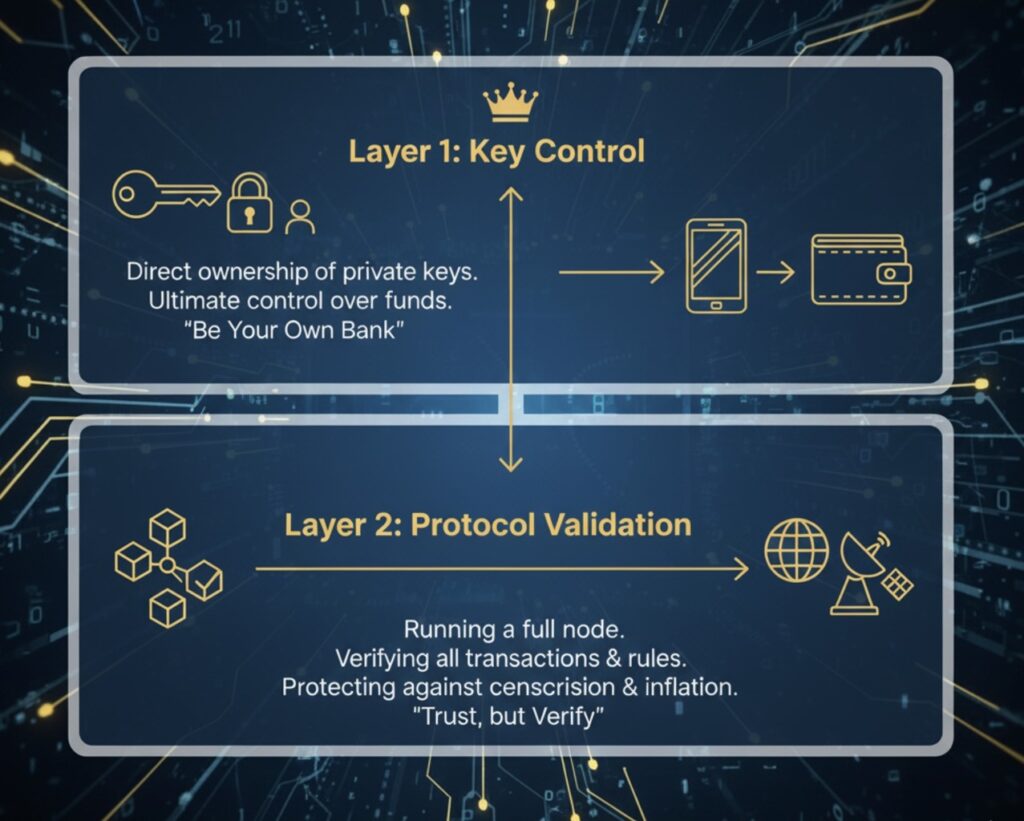
Figure 1: The two layers of Bitcoin sovereignty - key control and protocol validation

The Bastion of Sovereignty: How Running Your Node Enforces the User’s Point of View in the Bitcoin Network

In the evolving landscape of digital finance, Bitcoin stands as a revolutionary system designed to eliminate the need for trusted third parties. Yet many Bitcoin holders unknowingly surrender the very sovereignty that makes Bitcoin revolutionary by relying on custodians or lightweight clients. True Bitcoin sovereignty requires not just holding your private keys, but also validating […]

The Bastion of Sovereignty: How Running Your Node Enforces the User’s Point of View in the Bitcoin Network Read More »

Diagram showing Bitcoin self-custody as the foundation of digital sovereignty

From Keys to Cash Flow: Mastering Bitcoin Self-Custody and Monetization with the Nostr Protocol

In a world where centralized platforms control both our money and our message, Bitcoin and Nostr offer a powerful alternative. Bitcoin solves the monetary pitfalls of centralized systems, while Nostr addresses the corresponding need for decentralized, censorship-resistant communication. Together, they create a foundation for what I call Operational Sovereignty — taking full self-custody of your

From Keys to Cash Flow: Mastering Bitcoin Self-Custody and Monetization with the Nostr Protocol Read More »

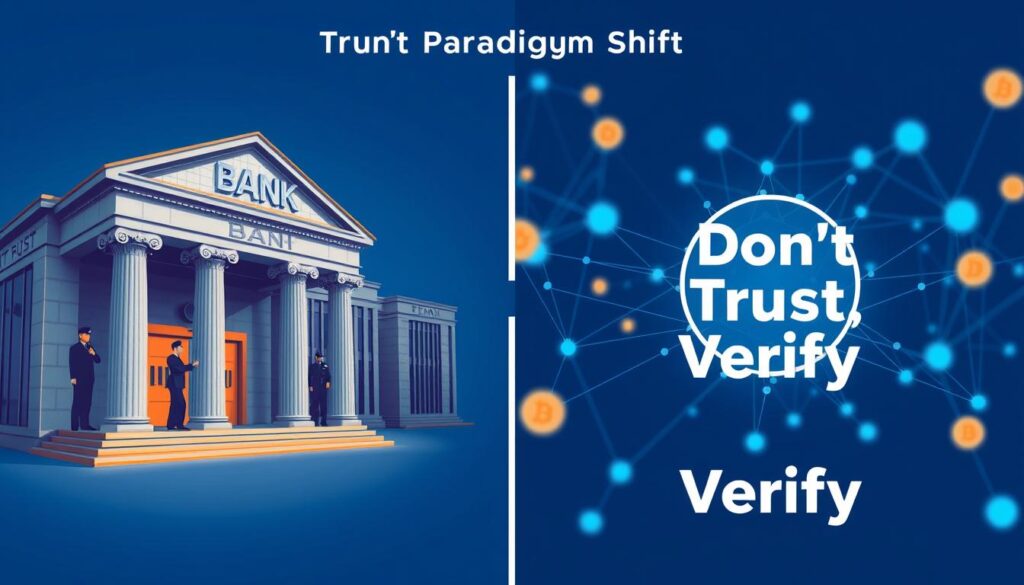
Comparison of centralized trust model with traditional bank buildings versus decentralized Bitcoin network visualization showing the Trust Paradigm Shift

The Trust Paradigm Shift: How Bitcoin and Open Source Are Redefining Institutional Custody

The financial world stands at a crossroads. For centuries, our economic systems have operated on a fundamental assumption: trust must be centralized, managed, and enforced by authorities. But Bitcoin introduced a radical alternative—a system where trust isn’t given blindly but earned through verification, transparency, and mathematical certainty. This paradigm shift challenges not just how we

The Trust Paradigm Shift: How Bitcoin and Open Source Are Redefining Institutional Custody Read More »

Institutional control vs individual self-custody illustrated as two paths diverging from a Bitcoin

The Digital Ledger Divide: Institutional Control vs Individual Self-Custody

The cryptocurrency ecosystem stands at a critical crossroads. On one side, we have institutional control—where established financial entities manage digital assets on behalf of users. On the other, individual self-custody—where users maintain complete sovereignty over their private keys. This fundamental dichotomy isn’t just a technical preference; it represents contrasting philosophies about financial freedom, security, and

The Digital Ledger Divide: Institutional Control vs Individual Self-Custody Read More »

bitcoin wallets

Choosing the Right Bitcoin Wallet: The Ultimate Security Guide

Your Bitcoin wallet is like a personal vault in the digital realm. It doesn’t actually store your Bitcoin—rather, it safeguards the private keys that give you access to your assets on the blockchain. Choosing the right bitcoin wallet is perhaps the most critical decision you’ll make in your cryptocurrency journey, as it directly impacts both

Choosing the Right Bitcoin Wallet: The Ultimate Security Guide Read More »

Person holding a hardware wallet device for Bitcoin self-custody

Beyond ETFs: Your Essential Guide to Bitcoin Self-Custody and Digital Security

The rapid rise in Bitcoin’s popularity has unfortunately been accompanied by a surge in crypto-related scams and fraud. In 2023 alone, losses related to crypto fraud increased by 45% year-over-year, reaching a staggering $5.6 billion based on 69,000 complaints. While Bitcoin offers revolutionary technology and financial freedom, its decentralized nature also makes it attractive to

Beyond ETFs: Your Essential Guide to Bitcoin Self-Custody and Digital Security Read More »